Blacklist
1. Blacklist
Security Protection
Preventing malicious attacks: Blocks hackers, malware, or other attackers from performing malicious actions against the system, such as brute-forcing passwords, injecting malicious code, or launching DDoS attacks. For example, adding IP addresses that frequently fail login attempts to the blacklist can effectively prevent them from continuing brute-force attacks, protecting the system's account security and data security.
Preventing unauthorized access: Restricts unauthorized users or devices from accessing sensitive resources and system functions, ensuring that only legitimate users and devices can access the corresponding services and data, thereby maintaining system confidentiality and integrity
Data Management and Privacy Protection
Protecting private data: Prevents specific users or sources from obtaining sensitive personal information, trade secrets, or other private data. For example, adding the IP addresses of known malicious data collectors to the blacklist prevents them from stealing users' private data, protecting users' privacy rights and the company's trade secrets.
Managing data access permissions: Based on users' roles, behavior, or other factors, certain users can be added to the blacklist to restrict their access to specific data, ensuring that data access and use comply with the company's security policies and regulatory requirements.
System Performance and Stability
- Reducing system load: By blocking malicious or unnecessary traffic from entering the system, the consumption of system resources such as CPU, memory, and network bandwidth is reduced, thereby improving system performance and response speed and ensuring that the system runs normally and provides quality service to legitimate users. For example, on high-traffic websites, adding the IP addresses of malicious crawlers to the blacklist prevents them from consuming large amounts of server resources and affecting normal website access.
- Avoiding system failures: Prevents requests and operations that may cause system failures or abnormalities from entering the system, reducing the risk of system failures and improving system stability and reliability.
Blacklist Configuration
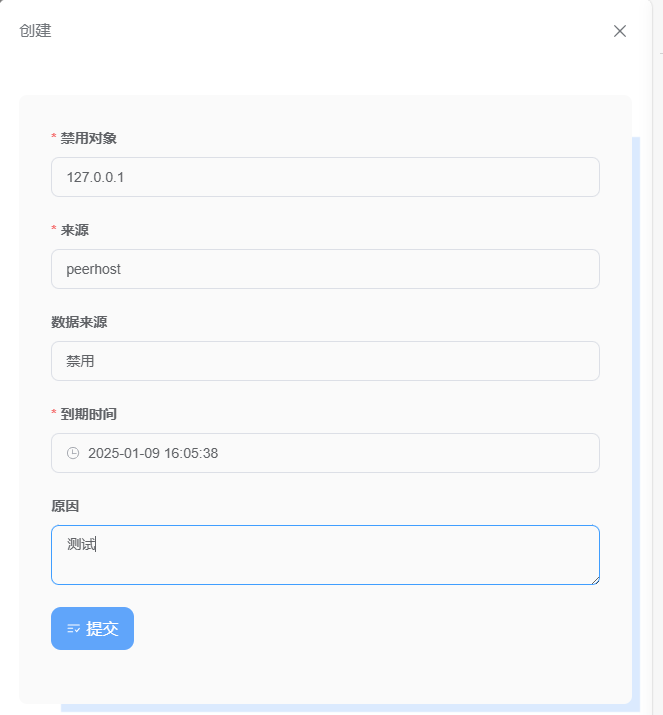
The configurable fields are as follows:
who The value of the blocked target
asSource The field of the blocked target
clientid : Client ID
username: MQTT username
peerhost: Client IP
source The source of the blocked target
util The expiration time of the block
Adding a Blacklist Entry
As shown in the figure below: the configuration restricts clients with IP address 127.0.0.1 from connecting to the server